
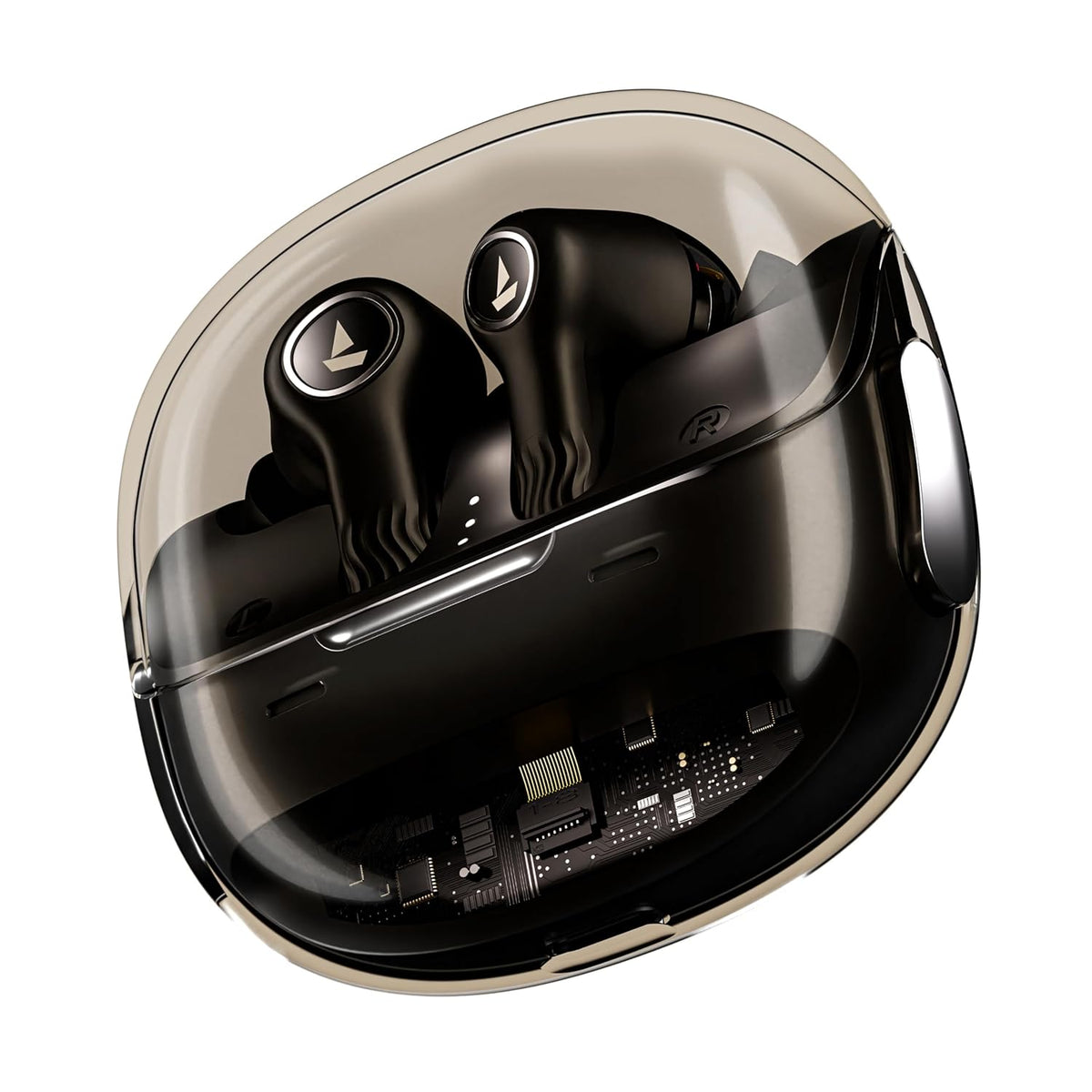
ANC and ENC both promise "noise cancellation", so they are easy to confuse. The short version: ANC reduces the noise you hear, while ENC reduces the noise the person on the other end of your call hears. Here is how each works and what to expect from them.
ANC: quieter listening for you
Active noise cancellation uses small microphones to pick up outside sound. A chip then creates an opposite sound wave and plays it through the speakers, cancelling part of the noise before it reaches your ear.
Feedforward, feedback and hybrid
- Feedforward: the mic sits on the outside of the earbud and hears noise before you do.
- Feedback: the mic sits inside, near your ear canal, and checks what is actually reaching you.
- Hybrid: uses both, which usually lets the system handle a wider range of noise.
What ANC is good and not so good at
ANC works best on steady, low-pitched sound such as engine drone, air-conditioner hum and traffic rumble. It is less effective against sudden or higher-pitched sounds like voices, clatter and horns. A good seal from the right ear tip blocks much of that passively, which is why fit matters so much.
Some models offer adaptive ANC, which adjusts its strength to your surroundings. ANC also uses extra battery, and some people notice a slight pressure sensation at first.
ENC: clearer calls for the other person
Environmental noise cancellation works on the microphone side during calls. Using one or more mics and processing, it separates your voice from background sounds such as traffic, fans and chatter, and reduces the background before the audio is sent. It does not change what you hear. Brands use names like ENC, AI noise reduction or call noise cancellation for it.
Side by side
| Point | ANC | ENC |
|---|---|---|
| Who benefits | You, the listener | The person you are talking to |
| When it works | Music, videos, calls, or even silence | Calls and voice chats |
| How it works | Plays anti-noise through the speakers | Filters noise out of the mic signal |
| Best against | Steady, low-frequency noise | Background noise around you while you speak |
| Can you switch it? | Usually, with modes such as ANC, transparency and off | Usually works automatically during calls |
| Read with care | dB figures are manufacturer claims | Mic count alone does not guarantee clarity |
About those dB numbers
Claims such as "up to 49dB" come from the manufacturer's own tests, often measuring the strongest reduction at a particular frequency. Brands test differently, so the numbers are not directly comparable, and your fit changes the result. Two earbuds with similar claims can sound quite different on a metro.
- The OnePlus Buds 3 list up to 49dB Smart Adaptive Noise Cancellation.
- The realme Buds Wireless Pro neckband lists hybrid ANC up to 35dB using feedforward and feedback mics, plus a transparency mode.
- The boAt Nirvana Crystl lists ANC up to 32dB as well as quad mics with ENx technology for calls, so it covers both sides.
Do you need both?
- Daily commuters and frequent flyers: ANC is worth having.
- Frequent callers in noisy places: look for multiple mics and call noise reduction.
- Both: many earbuds have both, usually listed as separate features, so check for each one by name.
- Quiet home or office: neither is essential, though a transparency mode is handy.
Quick answers
Does ENC block noise while I listen to music?
No. ENC works on the microphone during calls. For quieter listening, you need ANC or a good passive seal.
Is higher-dB ANC always better?
Not necessarily. The figures are manufacturer claims measured in different ways, and fit, comfort and how evenly noise is reduced matter as much.
Can I use ANC without playing music?
On most ANC earbuds and headphones, yes. Many people use it simply to make a noisy commute or office quieter.
Why does ANC feel odd in my ears?
Some people notice a slight pressure feeling. If it stays uncomfortable, try a lower ANC level or an adaptive mode if your model has one, or switch it off.
Browse ANC and noise-cancelling earbuds and headphones, or read Earbuds for Clear Calls for more on microphones.


