
Earbud and smartwatch listings often highlight "Bluetooth 5.3" as if it decides sound quality or range. The version number does matter, but less than you might expect. Here is what changed between Bluetooth 5.0 and 5.4, and what to check instead.
What a Bluetooth version is
Bluetooth versions are updates to the Bluetooth Core Specification. Each version adds new features and improvements, many of them optional, so a "5.3" label does not mean a product uses every 5.3 feature.
Bluetooth is backward compatible. Bluetooth 5.3 earbuds work with a phone on Bluetooth 5.0 or even 4.2; the connection simply uses the features both devices support.
Classic Bluetooth and Bluetooth Low Energy
Bluetooth has two main parts. Most earbuds and headphones stream music over Classic Bluetooth, while smartwatches, fitness bands and app connections mostly use Bluetooth Low Energy (LE). Many of the headline improvements in the 5.x versions, such as faster LE data rates and long-range modes, apply to LE, so they do not directly change how music streams to most earbuds.
The exception is LE Audio, a newer way of streaming audio over LE using the LC3 codec. It builds on features added in Bluetooth 5.2, but it only works when both devices specifically support it.
Version by version
| Version | Main additions | What it means for you |
|---|---|---|
| 5.0 | Faster LE data rate (2 Mbps), a long-range LE mode, larger advertising packets | Better for watches and smart devices; little direct effect on music streaming |
| 5.1 | Direction finding, faster reconnection through GATT caching | Mostly for location tracking and smart devices |
| 5.2 | LE isochronous channels, LE power control, enhanced attribute protocol (EATT) | The foundation for LE Audio and Auracast broadcast audio, where both devices support them |
| 5.3 | Connection subrating, improved channel classification and periodic advertising | Efficiency and reliability gains that can help battery life and stability |
| 5.4 | Periodic advertising with responses (PAwR), encrypted advertising data | Mainly for large device networks such as electronic shelf labels; little change for earbuds |
Newer versions, such as Bluetooth 6.0, follow the same pattern: check which features a product actually supports, not just the number.
What the version does not decide
- Sound quality: this depends mostly on the codec, drivers, tuning and fit.
- Real-world range: the common "10 metres" figure depends on walls, your body, antenna design and interference more than on the version.
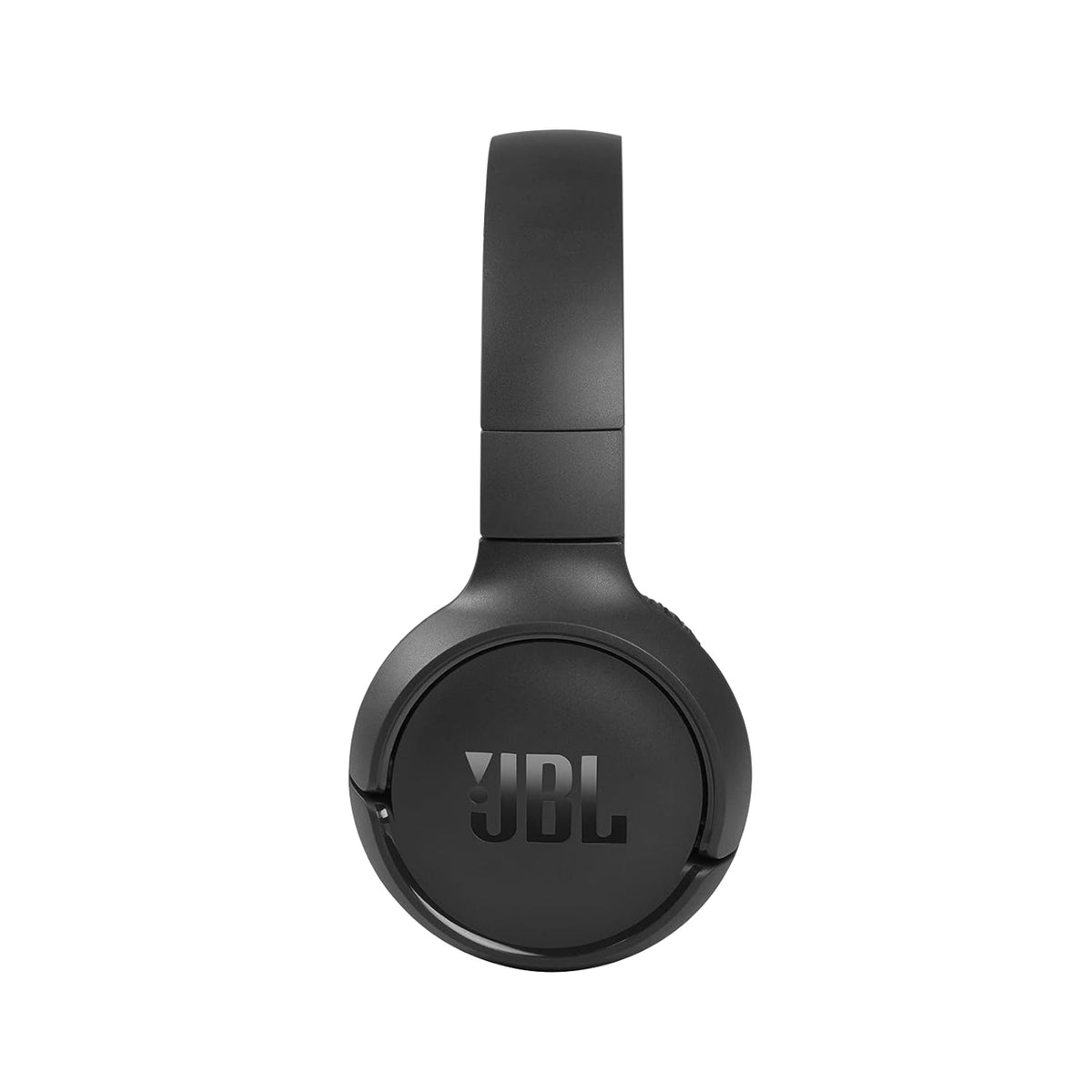
- Multipoint: this is a product feature, not a version feature. The JBL Tune 510BT, for example, lists Bluetooth 5.0 together with dual pairing (multi-point connectivity) for switching between two devices.
- Battery life: the chip, battery size and features such as ANC matter more.
Similarly, the OnePlus Buds 3 list Bluetooth 5.3, but their sound features come from elsewhere: dual drivers (10.4mm + 6mm) and support for the LHDC 5.0 codec, which needs a compatible phone.
Does your phone's version matter?
Yes, because a connection can only use features both sides support. New earbuds will still work with an older phone, but features such as LE Audio need support on both devices. Your phone's chipset and software also decide which codecs are available.
What to check instead
- The codecs the earbuds support, and whether your phone supports the same ones.
- Multipoint and quick-pairing features such as Google Fast Pair.
- LE Audio or LC3, if you want it, listed explicitly for both devices.
- Battery figures for the way you will use them, such as with ANC on.
- App support for firmware updates.
Quick answers
Will Bluetooth 5.3 earbuds work with an older phone?
Yes. Bluetooth is backward compatible, and the connection uses the features both devices support.
Does Bluetooth 5.3 sound better than 5.0?
Not by itself. Sound depends mainly on the codec, drivers, tuning and fit.
Does a newer version give more range?
Not necessarily for audio. The long-range modes in Bluetooth 5 apply to Low Energy connections, and real range depends on the device design and your surroundings.
What is LE Audio?
A newer way to stream audio over Bluetooth Low Energy using the LC3 codec, with features such as Auracast broadcast audio. It needs support on both the phone and the earbuds, which the version number alone does not guarantee.
Read our guide to Bluetooth codecs, or browse wireless earbuds.


